
The best CB radio for a trucker is rarely the one with the longest feature list. It is the radio that fits the available space, stays easy to operate while parked or safely stopped, and is connected to an antenna system that is actually ready to do its job. That last part matters more than buyers expect. A modest radio on a solid mount with healthy coax and a checked antenna will usually be more useful than an expensive radio installed around a poor cable route or an untested whip.
Start with the job you want the radio to do. A driver who wants to monitor nearby traffic and communicate around yards has different needs from someone building a dedicated SSB setup. The practical goal is a dependable local communications tool, not a promise of impossible range. The FCC describes CB Radio Service as a two-way voice service that can include traveler assistance, and its current rules reserve channel 9 for emergency communications or traveler assistance. That makes a clear, legal setup a better purchase than chasing power claims.
Start with the cab, not a ranking list
Before comparing models, look at the actual mounting space in the truck. A large classic chassis can be easy to operate because the controls are spaced out, but it needs a location where it will not interfere with knees, switches, cup holders, storage, air lines or a safe exit. A compact radio can solve a tight-space problem, but only if the display, microphone connection and controls remain easy to reach without stretching across the cab.
Measure the location, including the room behind the radio for power and antenna connectors. Leave space for the microphone cord to hang without crossing a shifter or pedal area. Think about glare at night, vibration on rough roads and whether you can read the channel display from the driving position. Those are not glamorous details, but they decide whether a radio becomes part of the truck or a box you stop using.
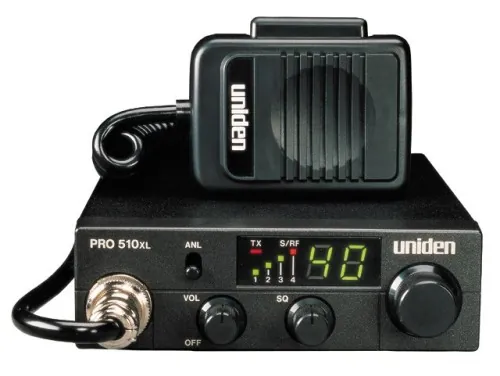
A compact, durable model is often the sensible choice when the cab offers one clean small location. For example, Uniden describes its PRO510XL as a 40-channel compact CB with a front microphone, squelch control and automatic noise limiter. That is a useful kind of feature set when the priority is straightforward operation, not an oversized display or a menu full of settings.
Choose controls you will use on the road
A good truck CB should let you make the basic adjustments quickly and predictably. Volume and squelch are the controls you will touch most. Squelch quiets the receiver until a signal reaches the threshold you set, which matters in a noisy cab. RF gain can help manage strong nearby signals on radios that provide it. A clear signal meter and a readable channel display make it easier to understand what the radio is doing without treating every burst of static as a fault.
Noise-control features deserve a realistic view. An automatic noise limiter, noise blanker or similar circuit can help with certain electrical noise patterns, but it cannot overcome every alternator, ignition, inverter or charger problem. If receive audio changes dramatically when the engine or an accessory changes state, inspect the power and installation instead of assuming a different radio will erase the symptom. The right radio gives you useful controls. It does not replace diagnosis.
Microphone placement matters too. A front microphone connector can make a shallow dash location easier to work with, while a side connection may fit a different bracket better. Use a real hanger and route the cord where it will not snag. If transmitted audio is the concern, choose a microphone that suits the radio and cab noise, then test it with a nearby station. Our CB microphone guide is a useful next stop when clearer voice pickup is the actual upgrade you need.
Do not overbuy features you cannot use
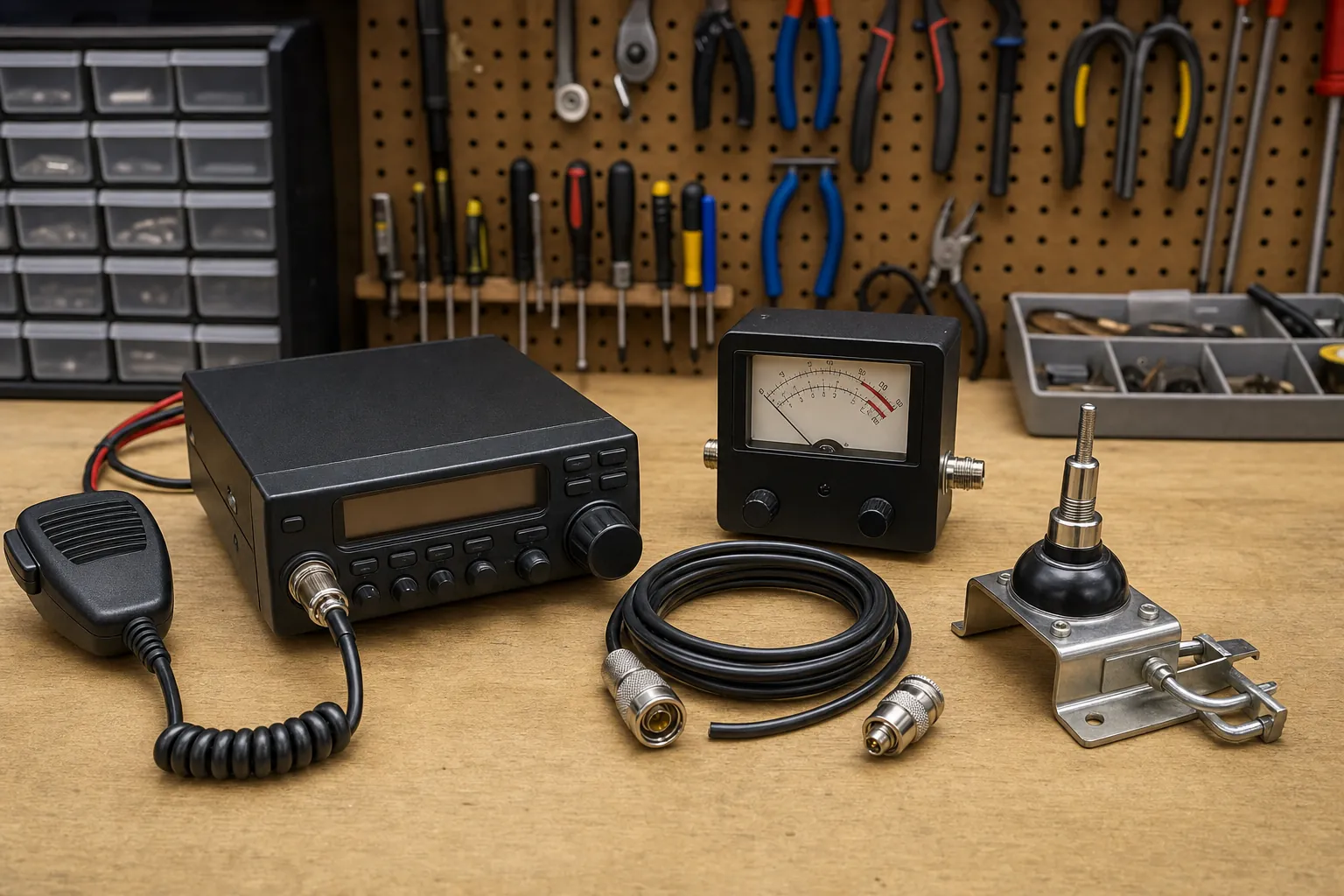
Features should solve a real cab problem. Weather reception can be valuable when you want another source of local conditions. A public-address connection can be useful for a specific work application. Instant channel access can save a few button presses. A built-in SWR meter can be convenient for monitoring, although it does not remove the need to understand the antenna system or follow the radio’s instructions.
AM and FM capability may matter depending on the radio and the people you expect to talk with. Single-sideband, or SSB, is a separate operating choice with its own controls and expectations. It is not automatically the best answer for every truck. Buy it when you have a clear reason to use it, not because a longer feature list sounds like a stronger radio. A standard certified CB can be the more straightforward choice for nearby communication and a simple cab setup.
Keep legality in the decision, too. The FCC’s current CB rules define CBRS stations as certified equipment and expressly prohibit using an external RF power amplifier to increase transmit power. A shop should help you build a dependable antenna system, not sell a shortcut that creates a compliance problem or masks an installation fault.
The antenna system decides whether the radio can perform
The radio sits inside the truck. The antenna system has to get the signal out of it. That means the antenna, mount, stud, coax and connectors are not accessories you can choose later. They are the second half of the purchase. A weak mount, badly routed cable or antenna that is surrounded by metal in the wrong place can make a new radio seem disappointing before the radio has had a fair chance.
Choose the mount before the antenna. Find a sturdy position that gives the antenna reasonable clearance and lets you inspect the hardware. Then select compatible hardware and a coax route that avoids sharp edges, heat, moving parts and pinch points. A cable that is crushed behind trim or has a loose connector can create the same kind of poor or inconsistent result people blame on a radio.
Every mobile CB system should be checked with an SWR meter after installation and after a meaningful change to the antenna, mount or cable. That check helps you see whether the system is behaving consistently across the band. It is not an invitation to trim a whip at random. Our SWR meter guide walks through the connection and reading process, while the antenna mounting guide covers the physical checks worth making first.
Match the radio type to the way you drive
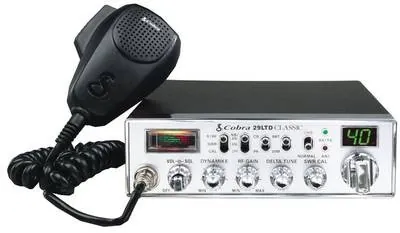
For many working trucks, a conventional full-size CB is a good fit when the cab has a safe place for it. The larger controls are easy to use, and a traditional faceplate can make quick adjustments less fiddly. Cobra’s current professional line, for example, lists 40 channels, adjustable squelch, Dynamike and RF gain across its 29-series options, with built-in SWR meters on the listed models. Those are useful features when they fit the cab and your normal use.
A compact radio can be better when space is scarce, when the truck already has a practical small mounting location or when you want a simple backup. Do not mistake compact for incomplete. The deciding question is whether the radio leaves room for a clean power route, a secure bracket, a microphone hanger and the antenna connector without forcing cables into a tight bend.
A feature-rich radio makes sense when you know which feature earns its place. Weather reception, a larger display, channel scanning or a built-in meter can all be useful. But a basic, well-installed radio is the better choice when the alternative is spending the whole budget on the faceplate and leaving the antenna system as an afterthought. If you are shopping for a whole setup, our CB radios for truckers page keeps the radio, antenna, microphone and mounting decisions together.

Set a budget for the complete installation
A realistic CB budget has more than one line item: radio, mounting bracket, antenna, coax, connector hardware and the small parts that make the route safe and tidy. If the truck needs a different mount or an old cable looks questionable, solve that before upgrading the radio. The radio alone cannot correct a broken shield, loose stud or an antenna that has never been checked on the vehicle.
Spend where the setup gets more dependable. A secure mount and quality cable route are hard to see once the installation is complete, but they shape everyday performance. A sensible microphone can improve how you are heard in a loud cab. An external speaker may help if the factory cab noise makes receive audio difficult to understand. Those choices address specific conditions instead of chasing a universal “best” purchase.
Custom CB Radios carries the radio categories, antennas and mounting equipment, and radio mounts needed to build around the truck. The purchase still hands off to the existing store, where current models and availability are kept up to date. That is more useful than treating this guide as a fixed list of products that might not fit your cab or remain available.
Test the setup before you depend on it
Once the radio is mounted, do a calm first check while parked. Confirm the power lead and fuse arrangement are secure, the microphone connector seats fully, the radio receives normal static with squelch open, and the antenna coax is snug at both ends. Then check the antenna system with an SWR meter according to the meter, antenna and radio instructions. Keep test transmissions brief, especially if the reading looks high or unstable.
Use a nearby known radio when possible. Test both receive and transmit on the same channel and mode. Notice what the signal meter, transmit light and audio do. If the radio can hear but cannot talk, do not replace it immediately. Start with the microphone, push-to-talk switch, basic controls, power feed and antenna system. The receive-but-no-transmit guide gives that symptom a practical order of checks.
Keep a note of the antenna type, mount location and final channel readings. If the radio changes after a rough route, a trailer swap or an antenna strike, that record gives you a useful baseline. A CB works best when the driver can tell the difference between a changed setting, an installation issue and an internal radio fault.
Know when a classic CB is enough and when another format fits
A standard CB is a good fit when the point is short-range, shared local communication with other nearby operators. It is familiar, simple to install and widely supported with mounts, microphones, antennas and service knowledge. For many drivers, that is the entire brief. They want to listen for nearby conditions, make a short call around a yard or check in with another driver without turning the radio into a second job.
SSB is worth considering only when you have a clear reason to use it. It adds operating controls and depends on finding other operators using the same mode. It can be an appropriate choice for someone who understands that use case, but it is not a magic replacement for an ordinary CB setup. A radio cannot create a conversation when nobody nearby is listening, and an SSB model cannot overcome a weak antenna system. Let the local use case lead the choice.
The same principle applies to weather, Bluetooth or hands-free features. They may be genuinely useful in the right truck, but they should not displace the basics. If the cab needs a compact chassis, the first priority is fit. If the cab is electrically noisy, the first priority is a sound power route and realistic noise controls. If the driver wants clearer reports from nearby vehicles, the first priority is a correctly installed antenna. Buy the feature that solves the problem you actually have.
Common buying mistakes that make a good radio look bad
The most common mistake is choosing the radio before looking at the truck. A popular full-size model may be a poor fit in a cab with limited clean mounting space, while a compact radio may sit perfectly in a purpose-built spot. When the radio is forced into a location, the rest of the installation often suffers too: cables bend too sharply, the microphone has nowhere useful to hang or the bracket is attached to something that vibrates.
The next mistake is treating the antenna as a separate later purchase. A truck can have a great radio and still communicate poorly if the antenna is low, loose, crowded by metal or connected with damaged coax. Start with a practical mounting point. If it is a semi, think about mirror arms, cab hardware, trailer clearance and the way the truck is washed and serviced. If it is a pickup or work vehicle, think about the bed, roof, rack and how the whip will clear normal obstacles. The trucker antenna guide helps make those tradeoffs before money is spent.
Another mistake is paying for claims instead of testing the finished system. A new radio can have a bright meter, extra knobs and a powerful-looking case, but the useful proof comes after it is installed. Does it receive a known local signal with squelch open? Does the microphone key the transmitter cleanly? Are the antenna readings stable? Is the radio comfortable to operate where it is mounted? Those answers matter far more than a marketing comparison table.
Make the first conversation with a shop more useful
When you need help choosing equipment, a few details make the answer much more specific. Have the truck type, available mounting location, current antenna arrangement and the kind of communication you expect to do ready. Say whether you need a compact radio, whether cab noise is a problem, whether you want weather reception and whether an existing radio or antenna is already installed. Those facts narrow the options without turning a simple purchase into guesswork.
If you already have a system that is behaving badly, describe the symptom rather than naming the part you think must be replaced. “I can hear but cannot talk,” “the receive audio is noisy with the engine running,” or “the SWR changed after the antenna hit a branch” gives a technician something concrete to work from. The shop can then separate a radio question from an antenna, microphone, power or connector issue. That is how you avoid buying a second radio to solve the same problem.
Custom CB Radios also offers a repair request for a radio that needs more than external checks. Bring the model, symptom, truck, antenna type and any SWR readings. A clear starting description protects your time and helps the shop decide whether the next best step is a repair, an installation correction or a different piece of equipment.
What to expect after installation
A new CB setup should feel predictable, not dramatic. With the antenna system checked and the controls set normally, you should be able to open the squelch, hear ordinary receiver noise, close it until the noise is muted and then hear a nearby transmission when the signal breaks through. The exact amount of activity will vary by highway, town, time of day and who is nearby. A quiet channel does not automatically mean the radio has failed.
Listen first, especially on a shared channel. Keep messages short and useful. The FCC’s rules allow brief radio checks and traveler-assistance communications, but a CB is not a replacement for dispatch, navigation, emergency services or a phone. Its value is immediate local communication with people who are already within range. That is why a correctly fitted, easy-to-use radio and antenna system has more practical value than a setup built around exaggerated distance claims.
Recheck the visible hardware after the first few drives. Vibration can loosen a bracket, move a microphone hanger or reveal a coax path that rubs against an edge. If anything changes, inspect it before making an adjustment to the antenna or radio. Small early corrections keep the system dependable and make later diagnosis much simpler.
Keep the original radio manual in the truck or save a copy where you can find it. It explains the exact control names, connector locations, fuse rating and operating steps for that model. When a setting gets moved or a symptom appears months later, the manual and your installation notes are more useful than guessing from a generic diagram. They also make it easier for the next driver, installer or repair technician to understand the setup without undoing good work.
A trucker CB buying checklist
- Measure the mounting space. Check room for the radio, connectors, microphone cord and a secure bracket.
- Choose the controls you will actually use. Prioritize clear volume, squelch, channel and receive information over a long unused feature list.
- Plan the antenna system with the radio. Select the mount, antenna, coax and connector route as one compatible installation.
- Keep the setup legal and realistic. Use a certified CB radio and do not rely on external power amplifiers or impossible-range claims.
- Check SWR and test with another radio. Confirm the complete system works before you need it on the road.
The best CB radio for a trucker is the one that earns its place every day: clear controls, a secure installation and an antenna system that has been checked instead of assumed. Start there, then add the features that solve a real need in your own working cab.
Build Around the Truck
Choose the setup that works together.
Compare cab-ready radios, antennas, mounts and supporting gear before you buy.
Shop Trucker CB Radios →Frequently asked questions
What is the best CB radio for a trucker?+
The best CB radio is the one that fits the cab, gives you the controls you will actually use and is paired with a sound antenna, mount and coax installation. A dependable basic radio with a properly checked antenna system is usually a better working choice than a feature-heavy radio installed as an afterthought.
Do truckers still use channel 19?+
Channel 19 is widely associated with highway traffic in the United States, but activity varies by route, region and time of day. Listen before transmitting, keep messages brief and remember that channel 9 is restricted to emergency communications or traveler assistance under FCC rules.
Do I need an SSB CB radio for a truck?+
Not necessarily. SSB can be useful when you specifically want that operating mode and understand its controls, but a standard certified CB radio can be the better fit for many drivers who want nearby road and yard communication. Choose the radio around the conversations you actually expect to have.
Will a better CB radio fix weak range?+
Not if the antenna system is the weak link. Start with the mount, antenna placement, coax route, connectors and an SWR check. A radio upgrade cannot repair a loose mount, damaged cable or an antenna that has not been checked on the truck.
Can I use an external amplifier with a CB radio?+
No. FCC CB rules prohibit using an external RF power amplifier to increase a CB station’s transmit power. A legal, useful setup starts with a certified CB radio and a carefully installed antenna system.
Keep Reading
Related Posts
Guide
How to Reduce CB Radio Static Without Guessing
Reduce CB radio static by setting squelch correctly, separating power noise from antenna noise and checking the installation in a useful order.Read the guide →
Guide
CB Radio Not Receiving? Start With These 7 Checks
CB radio not receiving? Check the squelch, RF gain, speaker path, mode, antenna connection and a known local signal before assuming the radio has failed.Read the guide →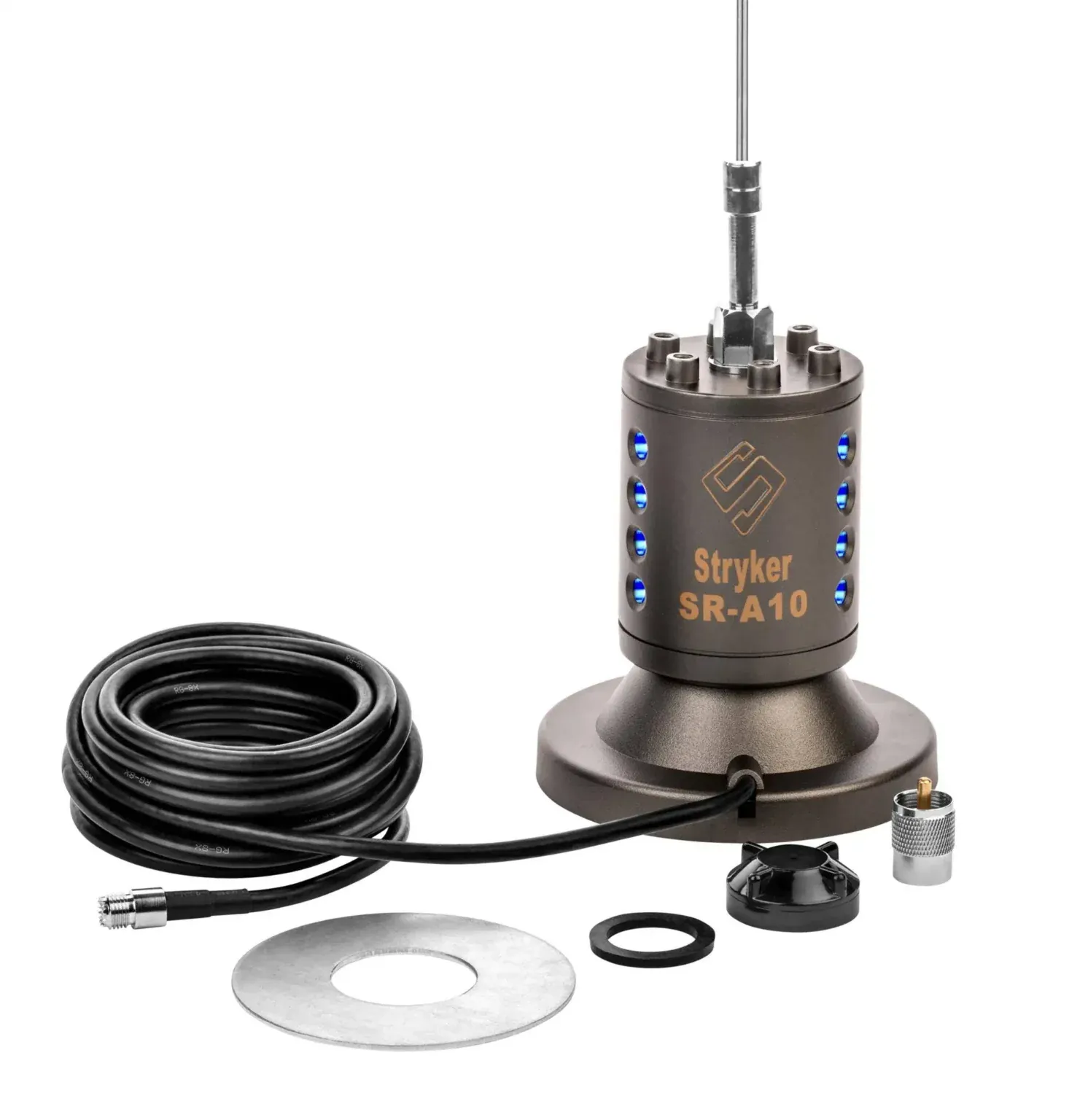
Guide
How to Test a CB Antenna Before You Transmit
Test a CB antenna with an SWR meter, inspect the mount and coax, read channel 1 and 40 results, and know when to stop and diagnose the installation.Read the guide →Guide