
A clean CB installation is less about finding a clever place to hide the radio and more about building one system that works together. The radio needs a secure home, the power wiring needs a safe route, the antenna needs a solid mount, and the coax needs to arrive without getting pinched or damaged. Miss one of those pieces and even a good radio can sound weak, pick up noise or give you confusing antenna readings.
This guide is for a typical mobile installation in a truck, pickup, car or SUV. It gives you a sensible order of work, not a substitute for the instructions supplied with your particular radio, antenna and vehicle. Check those instructions before drilling, connecting power or changing an antenna. The aim is a setup you can understand, inspect and use with confidence.
Start with a complete installation plan
Lay out the major parts before fitting anything: the radio, microphone, mounting bracket, antenna, antenna mount, coax, power lead, fuse hardware and an SWR meter or the radio's approved built-in test method. A small collection of basic hand tools is usually enough, but the right tool depends on the mount and the vehicle. Do not assume a convenient screw, trim panel or accessory socket is automatically the correct place to connect something.
Choose the radio location and antenna location as a pair. The radio needs to be within comfortable reach without blocking the road view, controls, vents, airbags, pedals or storage you use every day. The antenna needs a sturdy mounting point, useful clearance and a cable route that does not rub, crush or pull. If those two locations do not leave a clean path through the vehicle, revise the plan before starting.
Cobra's mobile CB installation guidance makes the same practical point: radio fit, speaker direction, antenna type and mounting location all affect the finished setup. There is no universal best spot. There is only the best safe, accessible spot in the vehicle you actually drive.
Mount the radio where it can be used safely
Use the supplied bracket or an installation method designed to hold the radio securely. Under-dash mounting is common when there is space, but it is not the only option. A console, a purpose-built mount or another solid location can work when it does not interfere with the vehicle. Before drilling, look behind the panel for wiring, ducts, factory modules or anything else you do not want to meet with a bit or screw.
Think about the speaker and microphone as well as the radio face. A down-firing speaker needs open space below it. A radio pressed against carpet, plastic or a console wall may be hard to hear even when the electronics are fine. The microphone should reach the driver without its cord crossing a shifter, pedal area, steering column or safety equipment. Keep the radio firmly mounted, but leave enough clearance to reach the connectors and controls for future inspection.
A tidy mounting choice pays off when you need to trace a problem later. You should be able to see where the power and coax connect, unplug the microphone without fighting a panel and confirm that the bracket hardware has not loosened. A radio that is difficult to inspect tends to stay that way until the day it fails at the worst possible time.

Route power deliberately and protect it correctly
Power wiring deserves the same patience as the visible mounting work. Follow the radio manufacturer's instructions for wire size, fuse rating, polarity, grounding and connection point. Many mobile CB installations use a properly fused connection at the battery, but the radio manual and vehicle guidance are the authority for your exact setup. Do not bypass a fuse, choose a larger fuse because one is handy or tap into an unfamiliar factory circuit just to avoid routing a lead.
Plan the wire path from end to end. Keep it clear of sharp edges, heat, moving linkages and places where a panel, seat or door can crush it. Protect wires where they pass through a metal opening, secure them so vibration cannot wear through the insulation, and leave enough service slack to inspect a connection without pulling on it. If your vehicle has a factory pass-through, use it only in the way the vehicle maker intended.
Good power routing also makes noise diagnosis easier. If you later hear alternator whine, ignition noise or an intermittent power loss, you can inspect a known route instead of guessing behind every trim panel. A professional-looking install is not about hiding every wire. It is about making each wire safe, supported and understandable.
Put the antenna mount ahead of the antenna
The antenna is a major part of the CB system, and the mount decides whether it can do its job. Choose a mount that is mechanically solid for the antenna and vehicle, gives the whip practical clearance, and provides the electrical path required by that antenna design. A mount can feel tight yet still create an issue if paint, corrosion, plastic spacers or coated hardware interrupt the connection the system expects.
Do not select a popular antenna first and then force it into the only remaining space. Look at the vehicle and find the strongest practical mounting location. Consider the cab, roof, bed, tailgate, mirror brackets, racks, trailer clearance, garage doors, trees and the places where you normally stand around the vehicle. The right installation is one the antenna can live with every day, not one that only looks good in a product photo.
Our CB antenna mounting guide covers the details worth checking around location, metal contact and clearance. If you are setting up a working truck, the trucker antenna guide helps sort out the practical tradeoffs between a simple single-antenna system and a more involved dual setup.
Run the coax without creating a new problem
Coax is the connection between the radio and the antenna, not an afterthought you can fold into any empty space. Route it with broad bends, away from sharp metal edges, heat, moving parts and places where it can be pinched by a door, seat or trim panel. Keep the cable supported rather than hanging from a connector. At both ends, make sure the connector seats cleanly and the center pin is straight, undamaged and fully engaged.
Do not pull the coax tight. The vehicle moves and flexes, so the cable needs enough freedom to stay intact. At the same time, avoid stuffing excess length into a tight random coil or wrapping it around power wiring. Keep any necessary extra length in relaxed loops and use a route that you can inspect later. If a reading changes when you move a cable or connector, that is a reason to stop tuning and inspect the cable path first.
The CB antenna cable guide gives a closer look at routing, connector checks and the warning signs of a damaged cable. It is often faster to inspect a cable carefully than to replace an antenna that was never the real problem.

Connect the antenna only after the mount and cable are ready
With the mount, antenna and coax installed, make a slow final connection check. Confirm the antenna is seated according to its instructions, the mount hardware is tight, the coax is connected to the correct antenna port on the radio, and no connector is cross-threaded or under tension. Do not transmit with the antenna disconnected or while you know the installation is incomplete.
A mobile antenna behaves as part of the vehicle it is mounted on. The same antenna can read differently after it moves from one vehicle, mounting point or cable route to another. That is normal. It is why the final check happens after the whole system is installed rather than on the workbench. The goal is a stable, safe result in the position you will actually use.
Check the antenna system with an SWR meter
Before relying on the radio, check the antenna system with an SWR meter that is appropriate for CB frequencies and your radio's output. An external meter is connected in line between the radio and antenna with the radio on the transmitter side and the antenna coax on the antenna side. Follow the meter's own instructions, especially if it uses a calibration step. Keep each test transmission only as long as the meter procedure requires.
Take readings on channels 1 and 40, and use channel 20 as a helpful middle reference. The comparison between the two end channels tells you more than one isolated reading. If the readings are high on both ends, jump around, or change when the cable or mount is touched, pause the process. Inspect the mount, coax and connectors before changing antenna length. A meter is a diagnostic tool, not a command to start cutting a whip.
Use the antenna maker's adjustment method and make only one small, reversible change at a time. The SWR meter guide explains the connection and measurement process, while the antenna tuning guide explains how to respond to the channel pattern without guessing. For the technical background, the ARRL's explanation of standing waves shows why a mismatch is a clue about the whole feed system.

Finish with a real-world inspection
Once the system gives stable readings within the limits specified for your equipment, put the vehicle back together carefully. Check that the radio bracket is tight, the microphone has a safe resting place, the coax and power wiring are supported, and the antenna clears the vehicle as expected. After the first drive, inspect the mount and cable again. Vibration can reveal a loose fastener or a cable route that looked fine while parked.
Keep a simple note of the channel readings and the antenna position. That gives you a useful baseline if the setup changes after a hard bump, an antenna strike, a cable repair or a vehicle modification. If the radio later receives but will not transmit, start with the receive-but-no-transmit checks. If the radio needs a professional diagnosis after the outside checks are complete, a clear description of the installation saves time.
CB use also comes with operating rules. The FCC's current CB Radio Service rules cover the service, including the equipment and operating limits that matter after installation. A careful, legal installation is more useful than a setup built around range promises or shortcuts.
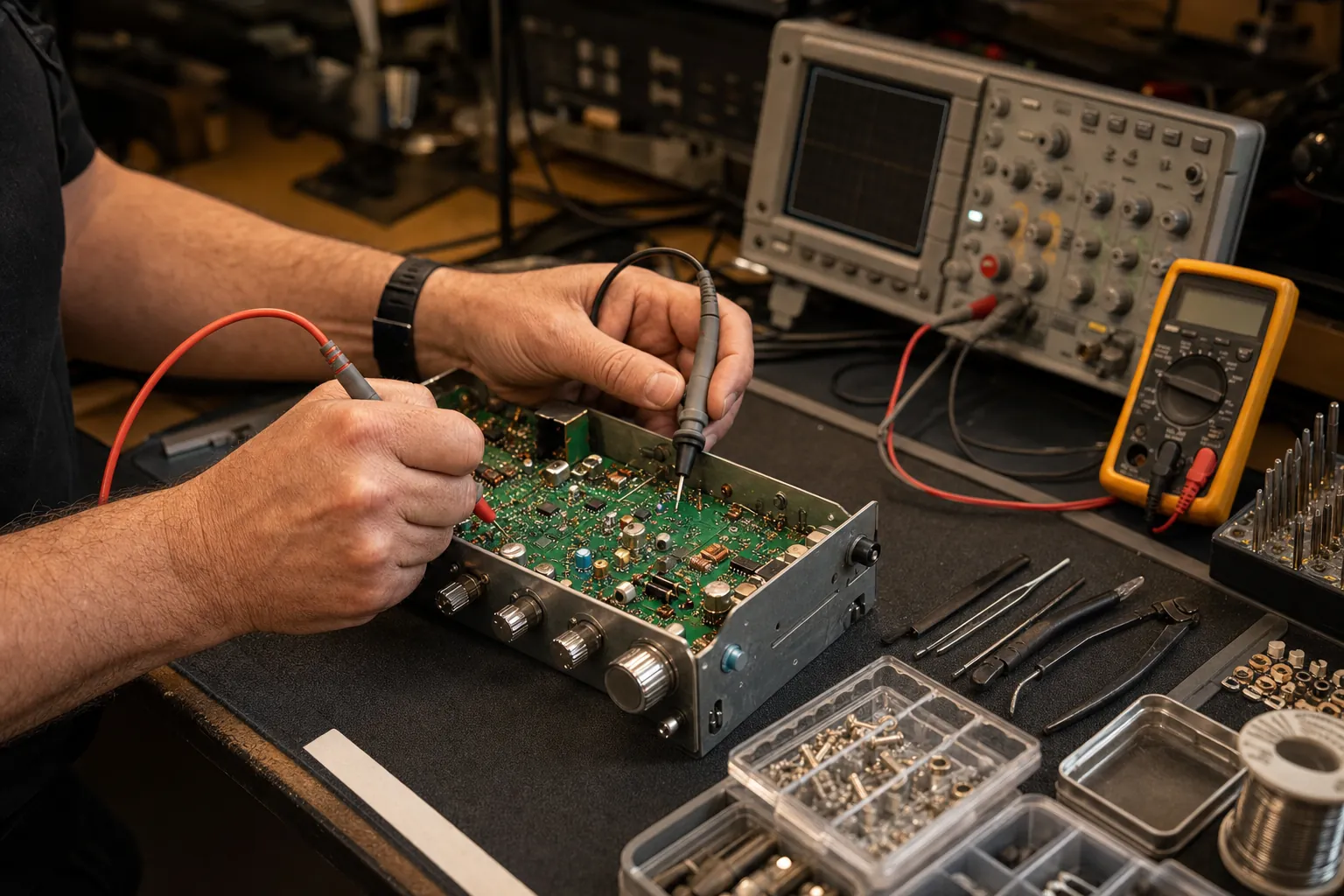
Build It as a System
Start with gear that fits the vehicle.
Custom CB Radios can help you compare radios, antennas, mounts, coax and the practical details that make the setup work together.
Shop CB Radio Setups →Frequently asked questions
What do I need to install a CB radio in a vehicle?+
A typical mobile installation needs the radio, a suitable antenna, a mount, coax cable, power wiring with the correct fuse, basic hand tools and a way to check the antenna system with an SWR meter. Follow the instructions for your radio, antenna and vehicle.
Where should I mount a CB radio?+
Mount it where the driver can reach the controls without blocking the road view, airbags, pedals, vents or other vehicle controls. Check behind the proposed mounting surface before drilling, and make sure the microphone cord can be used safely.
Should I wire a CB radio straight to the battery?+
Follow the radio manufacturer and vehicle guidance for the power connection. A direct, properly fused battery connection is common for many mobile installations, but the fuse size, wire route and grounding method must suit the exact radio and vehicle.
Do I need to tune a CB antenna after installation?+
Yes. An antenna should be checked on the vehicle where it will be used because the mount, nearby metal, cable route and antenna location all affect the result. Use an SWR meter and the antenna instructions before relying on the radio normally.
Can I use a CB radio without an antenna?+
No. A CB radio needs a properly connected antenna system. Do not transmit without the antenna connected or into a clearly high or unstable SWR reading. Finish the antenna installation and check it before normal use.
Keep Reading
Related Posts
Guide
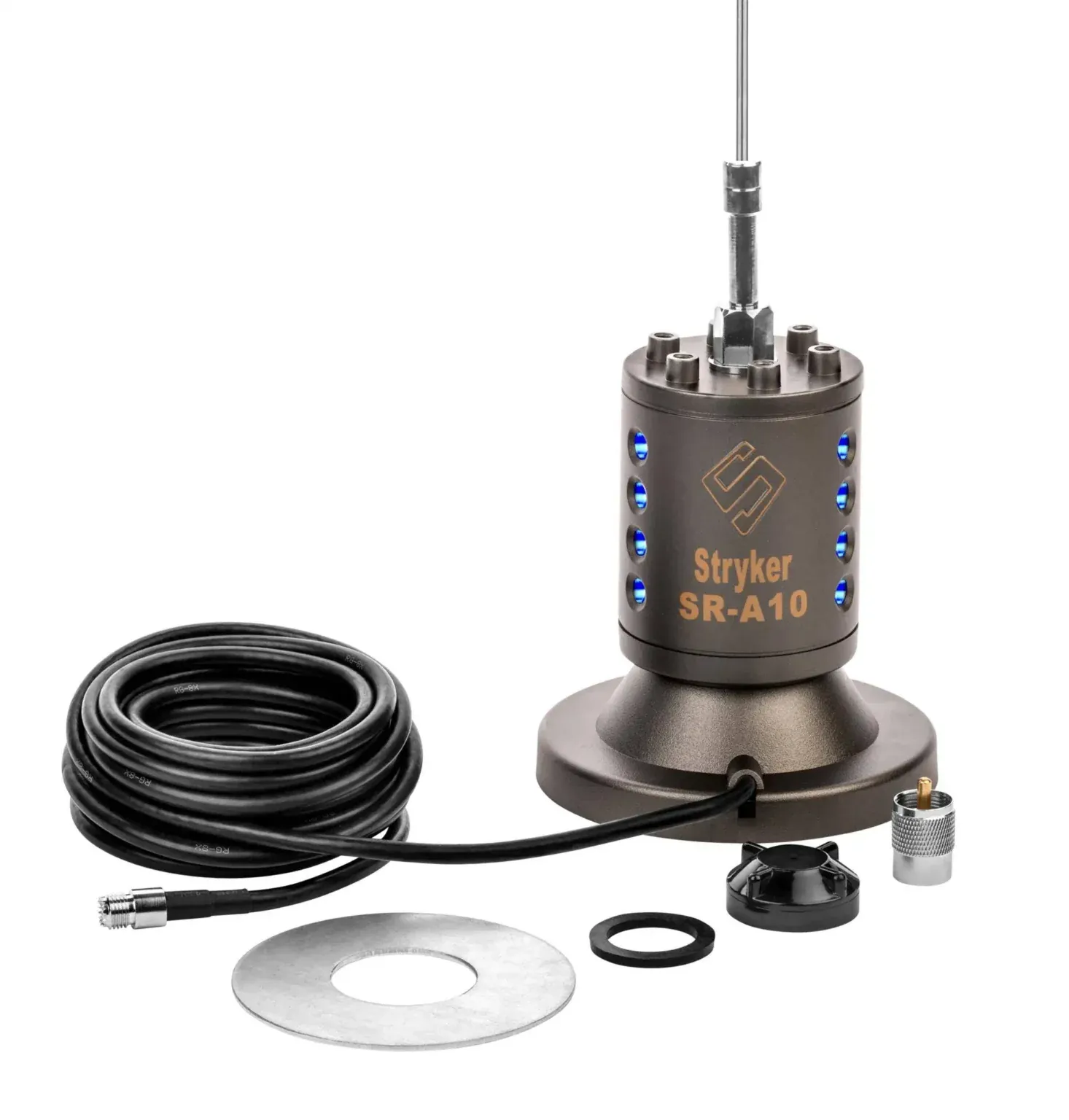
How to Test a CB Antenna Before You Transmit
Test a CB antenna with an SWR meter, inspect the mount and coax, read channel 1 and 40 results, and know when to stop and diagnose the installation.Read the guide →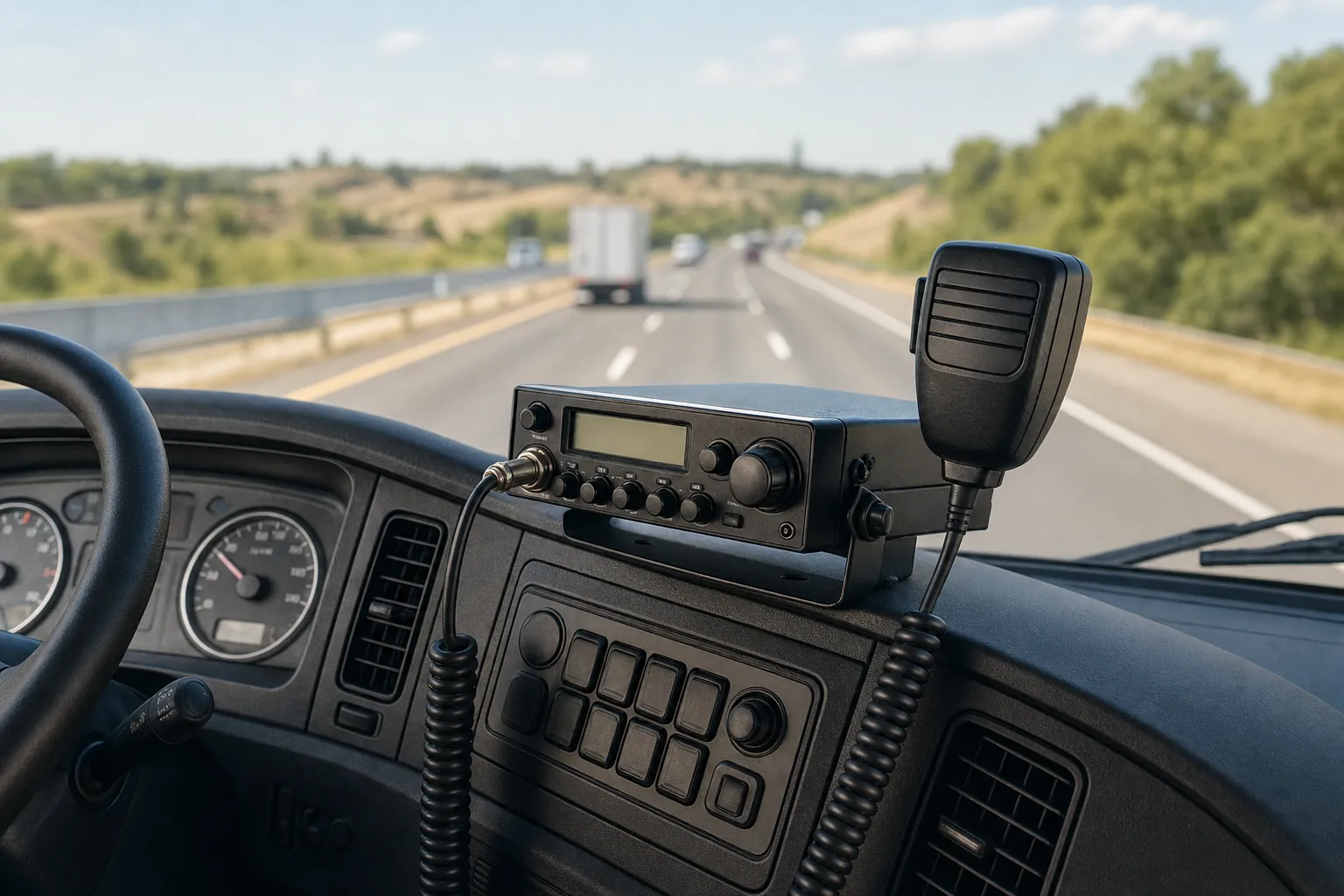
Guide
Do Truckers Still Use CB Radios? What They’re Good For
CB radios are still useful for nearby, real-time road communication. Learn where they fit alongside a phone, what to expect and how to build a dependable truck setup.Read the guide →
Guide
CB Radio Turns On but Has No Sound? 7 Checks Before Repair
CB radio turns on but no sound? Check the volume, squelch, external speaker, microphone and audio modes before booking a repair.Read the guide →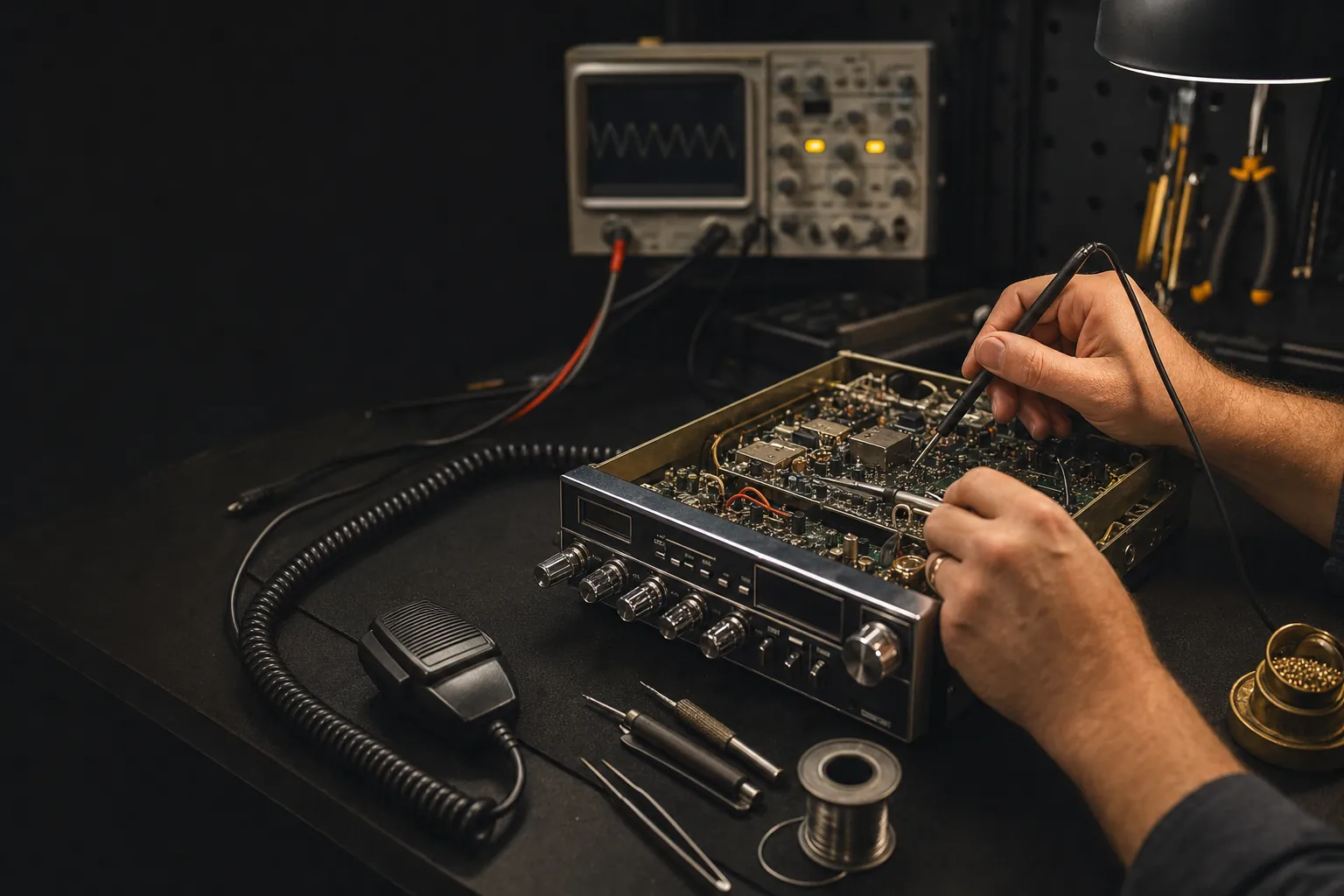
Guide