“Mod” gets used loosely in CB radio conversations. It can mean a sensible repair, a better microphone, a cleaned-up power connection, an antenna improvement or an internal change to the transmitter. Those are not the same thing, and treating them as though they are is how people spend money without solving the problem they bought the work to fix.
A good modification starts with a clear goal: better receive audio, reliable transmit audio, a cleaner installation or a radio restored to proper working order. A bad modification starts with a promise that sounds impressive but never asks how the radio is installed, what the antenna readings are or what the driver needs the radio to do. The difference is not the name of the mod. It is whether the result is useful, reliable and appropriate for the radio’s intended service.
First, be clear about what a legal CB setup allows
For a certified CB transmitter, there is an important line between service work and changes that alter the radio’s technical operation. The FCC’s current equipment-modification rule says that changes adding transmit frequencies, increasing modulation, changing modulation type or increasing transmitter output power can void the equipment’s certified status. That is not a detail to brush aside when deciding where to spend your money.
The same applies to the common idea that an external amplifier will turn an ordinary CB installation into a better setup. The FCC’s CB amplifier rule prohibits using an external RF power amplifier to increase a CB station’s transmitting power. A modification that leaves a buyer with equipment they should not operate is not a good deal, regardless of what a meter says on a bench.
That does not mean every dollar spent on a radio is wasted. It means the value should come from legal, practical work: diagnosing a fault, restoring the radio, making the antenna system work properly, improving the installation or choosing accessories that address a real day-to-day issue. Those changes can make a CB more useful without turning it into something it was never meant to be.
What a good modification actually does
A good modification has a job you can describe in one sentence. “The radio is hard to hear over road noise.” “The microphone audio is weak.” “The antenna readings changed after the mount moved.” “The radio cuts out when the truck hits a bump.” Each is a specific problem with a logical path to diagnosis. A technician can inspect the relevant part of the system, measure the result and explain what changed.
Good work also respects the whole station. A CB is not only the radio body. It is the radio, power connection, microphone, coax, mount and antenna working together. A radio repair that corrects a loose microphone socket is worthwhile if that was causing intermittent transmit audio. Replacing damaged coax is worthwhile if the cable is creating unstable readings. Reworking a poor mount is worthwhile if the antenna does not have the electrical connection it needs. Each one addresses the actual bottleneck.
Finally, a good modification is repeatable. The radio should be easier to use after the work, not fussy, hot, noisy or dependent on a particular microphone position to sound acceptable. A repair or setup improvement should leave you with a system you can understand and maintain. If nobody can explain what was changed, why it was changed and what was checked afterward, the work is difficult to evaluate and even harder to trust.
What makes a bad mod a waste of money
A bad mod solves the wrong problem, or never establishes that there is a problem to solve. The classic example is chasing more output when the antenna system has not been checked. A poor mount, damaged coax, loose connector or high SWR can limit the setup long before the radio’s power becomes the deciding factor. Spending on a transmitter change first can leave all of those faults in place, then make them harder to diagnose.
Another bad sign is work sold only with vague language. “More swing,” “louder audio” and “more range” sound attractive, but they are not a diagnosis. Ask what the radio is expected to do better in your truck or vehicle, what measurement will confirm the improvement, and what tradeoffs the work creates. A responsible answer recognizes that range changes with terrain, antenna placement, channel conditions and the station at the other end. Nobody can honestly promise a fixed distance from a radio modification alone.
Bad work can also create a reliability problem. When a radio is altered without a sensible plan for heat, signal cleanliness, power supply and the rest of the installation, the owner may get a short-lived result followed by distorted audio, erratic operation or an expensive repair. The first bill feels like an upgrade. The second bill reveals that the original work did not improve the system at all.
Five signs you are being sold a bad mod
The phrase “bad mod” does not mean every technician is trying to mislead someone. Sometimes a customer asks for the wrong thing, or a shop is working from an incomplete picture of the vehicle. Still, there are warning signs that tell you to pause before approving the work. They are useful whether you are buying a used radio, comparing shops or deciding what to do with the radio already in your truck.
- The seller never asks about the antenna. A radio and antenna are one system. If there is no conversation about the antenna, mount, coax or SWR, the recommendation is not based on the parts that often determine real-world performance.
- The promise is only a meter number. A measurement can be useful, but a single claimed number does not tell you whether the radio will be clear, dependable or well suited to your vehicle. Ask what that number means for the problem you are trying to solve.
- No tradeoffs are discussed. Any meaningful work has limits. A good recommendation explains what it can improve and what it cannot. Claims with no mention of installation, heat, signal quality or operating rules are sales language, not useful guidance.
- The original fault is ignored. A radio that loses power, will not key, has distorted audio or develops a high SWR reading needs a diagnosis. Adding a modification before finding the fault can turn one repair into a larger and more expensive problem.
- The work cannot be described in plain language. You should not need to understand the circuit, but you should get a straight answer about the symptom, the work, the expected result and what was checked afterward. If those answers stay vague, keep your money in your pocket.
These signs matter because they protect the buyer from a common trap: paying for the most exciting option before paying for the useful one. The best radio setup is rarely the one with the longest receipt. It is the one whose radio, microphone, power connection and antenna are all doing the job they were chosen to do.
Use a symptom-to-solution approach instead
Start with what you notice while using the radio, not with the modification menu. If you can hear stations but they cannot hear you, inspect the microphone, mic gain, antenna system and power connection. If nearby conversation is hard to follow, focus on speaker placement, squelch, RF gain and noise-control features. If the radio worked well before a change to the truck, antenna or mount, inspect what changed before assuming the radio itself is weak.
This approach keeps the work proportional to the problem. A driver whose real issue is road noise may be well served by a properly selected microphone or external speaker. A driver with an intermittent transmit issue may need a microphone plug, power lead or radio repair. A driver who wants better results from a new installation may need a taller practical antenna, a better mounting location or a careful SWR check. None of those problems are fixed by simply asking for the most aggressive-sounding internal change.
Think of it like a truck with a poor tire. More engine power will not correct the vibration, and a shinier accessory will not fix the wear pattern. The right expense is the one that addresses the fault. In a CB setup, that often means looking at the antenna path first because it is exposed to weather, vibration and installation compromises that the radio on the dash never sees.
Put the money into the antenna system before chasing radio changes
The antenna system is usually the best place to start because it affects both transmitting and receiving. A capable radio connected to a poor antenna setup cannot deliver what the spec sheet suggests. Before considering any change to the radio, make sure the antenna is mounted solidly, the coax is undamaged, the connectors are secure and the installation is checked where it will actually be used.
Start by checking SWR on the relevant channels with a method you can repeat. Our SWR meter guide explains how to connect and use a meter, while the CB antenna tuning guide covers the channel-by-channel pattern that tells you whether adjustment is even appropriate. Those checks cost less than throwing parts at the radio, and they give you evidence instead of a guess.
Mounting and cable routing deserve the same attention. A mount that is mechanically tight but electrically isolated by paint, corrosion or hardware can create a problem that looks like a radio issue. Coax pinched in a door, rubbed against a sharp edge or damaged at a connector can do the same. The antenna mounting guide and CB antenna cable guide are useful places to check those fundamentals before paying for internal radio work.
A better order for spending your CB budget
When a setup is new, unreliable or simply disappointing, put the budget in order of what has the greatest chance of improving everyday use. This is less exciting than a single dramatic modification, but it is how you avoid buying the same solution twice.
- Verify the installation. Confirm that the radio has clean power, the microphone connection is secure and the mount and coax do not show obvious damage. These checks establish a sound starting point.
- Make the antenna system healthy. Choose a practical antenna and mounting location for the vehicle, protect the coax and measure SWR. This step supports both sides of every conversation you have on the radio.
- Improve the part that affects comfort. Add a microphone, speaker or accessory only when it solves a known issue such as cab noise, microphone placement or receive clarity.
- Repair confirmed faults. If the radio has a real electrical issue, repair it with a clear description of the symptom and the bench work required. Do not use an accessory purchase to cover a fault inside the radio.
- Replace only when the current radio is the wrong tool. A replacement makes sense when you need a different size, controls, legal operating features or reliability level, not because a generic modification promise made the old one sound inadequate.
That order works because each step gives the next one a fair chance to succeed. A quality microphone is more useful after the antenna system is healthy. A new radio is more satisfying when it is connected to an antenna system that has already been installed and checked correctly. Every dollar has a job, and there is less chance of finding out later that the first purchase was aimed at the wrong part of the system.
Choose upgrades that solve the way you actually use the radio
Once the core antenna system is right, spend based on the issue that remains. If receive audio gets buried under road and engine noise, a suitable external speaker or radio with useful noise-control settings may make the setup much more pleasant to use. If people say your voice is hard to understand in a noisy cab, a quality noise-cancelling microphone may be a more direct answer than any internal change.
If the radio has a real fault, repair is the right investment. A broken microphone connector, intermittent power lead, failed control or damaged output stage will not be fixed by accessories or a stronger-looking spec sheet. In that case, describe the symptom, what changed before it began and any antenna readings you took. That gives the technician a head start and helps you decide whether the radio is worth repairing or whether replacement makes more financial sense.
If you are replacing an old radio, choose the radio around the cab, the intended service and the controls you will use. A compact unit may be the better choice in a tight vehicle. A radio with weather coverage, clear physical controls or better receive features may earn its price every day. The CB radio selection page is a better starting point than assuming an internal alteration can turn the wrong radio into the right one.
Questions to ask before authorizing any work
Good decisions get easier when the conversation stays concrete. You do not need to know every circuit inside the radio, but you should know what problem you are paying to solve. A shop that does careful work should be comfortable discussing the symptoms, the inspection and the expected result in plain language.
- What specific problem will this work solve? “More performance” is not enough. Ask how the result will improve your actual use of the radio.
- What will be checked first? The answer should include the radio and the antenna system when the symptom could involve either one.
- What will be measured before and after? A useful answer might include SWR, connection condition, receive behavior or microphone audio, depending on the fault.
- Does the work keep the radio appropriate for its intended service? This question keeps the decision grounded in reliability and rules rather than hype.
- What else might be limiting the setup? A good technician will tell you when the antenna, cable, mount or power wiring deserves attention before additional radio work.
Those questions protect your budget because they make it harder to buy a generic promise. They also make it easier to compare repair estimates. The lowest price is not automatically the best value if it ignores the cause of the problem and leaves you paying for another visit later.
What careful radio work looks like
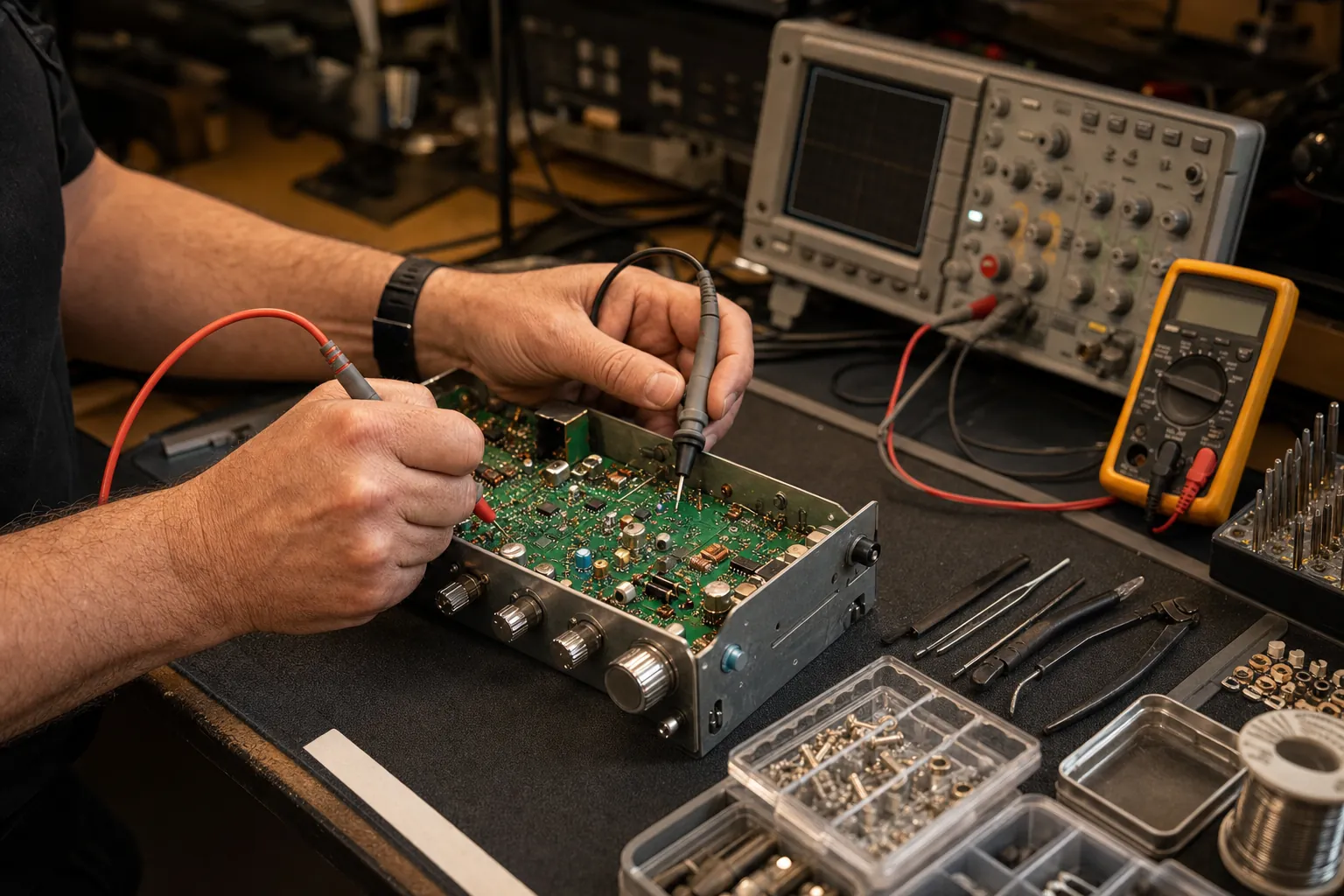
Careful work begins before a tool touches the radio. The technician should understand the model, the symptom, the vehicle or base-station setup, the antenna system and anything that changed before the issue appeared. That context matters because a radio that seems weak on one truck may work normally when tested with a known-good power source and antenna load. The point is not to make the repair sound complicated. It is to avoid charging you for an internal solution to an external problem.
After the inspection, the explanation should still be simple: what was found, what needs attention, what can wait and what result you can reasonably expect. A clear diagnosis does more for a customer than a vague performance claim because it gives the owner a choice. You can approve the repair, improve the antenna installation first or decide a replacement is the better value. You are not locked into paying for work you do not understand.
That approach also protects a good radio. An older unit with a sound design may need service, connections cleaned up or accessories matched to the way it is used. There is no prize for replacing a repairable radio just because the first suggestion was a modification. The useful question is whether the money will produce dependable communication, not whether the invoice has the most dramatic wording.
When repair beats modification
Sometimes the best “mod” is not a mod at all. It is restoring the radio to the condition where it can do its job. A radio that receives but will not transmit, cuts in and out, has weak microphone audio or shows unstable antenna readings needs diagnosis first. Changing multiple parts at once can hide the cause and increase the final bill.
Start with simple, observable checks: power and fuse condition, microphone connection, antenna mount, coax condition and SWR. Our guide to a CB radio that receives but will not transmit walks through those basics. If the symptoms remain after those checks, a focused repair request is a more intelligent next step than paying for a performance claim that does not address the fault.
That is the practical difference between good money and wasted money. The right work makes the system dependable, understandable and easier to use. The wrong work chases a number, ignores the supporting equipment and leaves the original limitation untouched.
Before you authorize anything, write down what the radio does now, when the problem occurs and what has already been checked. That small amount of information turns a vague request for a mod into a useful conversation about the right next step. It also helps you keep the goal where it belongs: clear, reliable communication from a setup that makes sense for your vehicle.
A good decision may be less glamorous than an advertised upgrade, but it is usually the one you appreciate months later. The microphone is easy to reach, the receive audio is usable, the antenna readings are stable and the radio works when traffic, weather or a work call makes it matter. That is real value. It does not depend on a magic phrase, a questionable shortcut or an impressive number with no context.
Need a Straight Answer?
Fix the limiting part of the setup.
Share the radio model, the symptom and what you have already checked. The shop can help you separate a repair need from an accessory or installation issue.
Request a Repair →Frequently asked questions
What is a good CB radio mod?+
A worthwhile change solves a specific problem and leaves the radio dependable. For a legal CB setup, that often means repair, setup work, a better antenna installation, cleaner power wiring, a suitable microphone or an external speaker. It is not simply the change that produces the biggest number on a meter.
Can a CB radio be modified for more power?+
A certified CB transmitter must stay within the applicable CB rules. The FCC says modifications that add transmit frequencies, increase modulation or increase output power can void the equipment’s certified status, so more power is not the right path for a legal CB installation.
Will a peak and tune make my CB talk farther?+
Not reliably. Communication range depends heavily on the antenna, its mounting position, coax condition, radio settings, terrain and channel conditions. If the antenna system is poor, a power-focused alteration can spend money without fixing the reason the setup performs badly.
What should I upgrade first on a CB setup?+
Start with the antenna system. Choose a suitable antenna and mount, route healthy coax, and check the system with an SWR meter. After that, address the specific problem you still have, such as noisy receive audio, poor microphone clarity or a radio that needs repair.
How do I know whether a radio shop recommendation is worth it?+
Ask what symptom the work will address, what will be measured before and after, how the radio will remain suitable for its intended service, and whether the antenna system has been checked. A clear answer is more useful than a vague promise that the radio will be louder or talk farther.
Keep Reading
Related Posts

Guide
How to Install a CB Radio: A Practical Vehicle Guide
Plan a safe, dependable CB radio installation by choosing the radio location, power route, antenna mount, coax path and final SWR check in the right order.Read the guide →
Guide
Do Truckers Still Use CB Radios? What They’re Good For
CB radios are still useful for nearby, real-time road communication. Learn where they fit alongside a phone, what to expect and how to build a dependable truck setup.Read the guide →
Guide
CB Radio Turns On but No Sound: What to Check
Use a simple audio troubleshooting sequence to find out whether the problem is a control, speaker connection, microphone mode or a radio that needs repair.Read the guide →
Guide