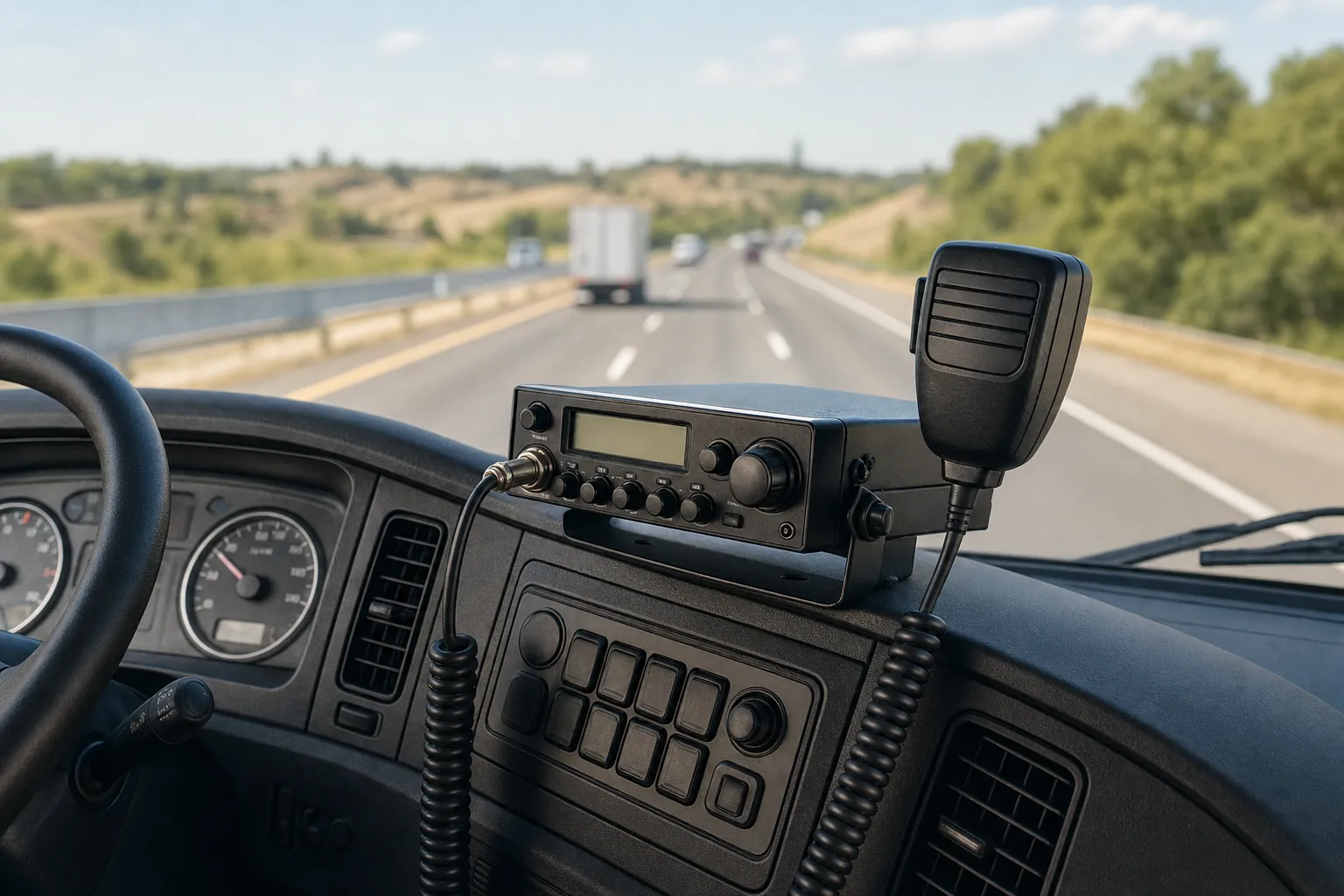
Yes, truckers still use CB radios, but the role is more practical than it was decades ago. You may not hear constant conversation on every highway, and a smartphone now handles dispatch, navigation and one-to-one calls. A CB still does one thing very well: it lets a driver hear from, or speak to, the vehicles immediately nearby without needing a contact list, signal from a carrier or time to explain who should receive the message.
That makes it a useful extra tool for a working truck, not a promise that every mile will be busy. The value changes by route, region, traffic conditions and the kind of driving you do. A driver who expects a CB to replace a phone will be disappointed. A driver who wants a simple way to hear local road conditions, talk through a crowded yard or coordinate briefly with nearby trucks may still find it worth the dash space.
What a CB still does well on the road
A CB is a nearby shared conversation. That is the point. When traffic stops unexpectedly, a lane closes, a scale line backs up or a driver needs to ask what is happening just ahead, the people with the best information may be in the next few vehicles. A quick, plain-language exchange can be faster than trying to find the right person through an app or make sense of a brake-light wall around the next bend.
It is also a simple traveler-assistance tool. The current CB Radio Service rules specifically allow communications to assist highway travelers and give emergency communications priority. That does not make a CB a substitute for calling emergency services. It does explain why a local radio can still matter when drivers need to share a brief, immediate update.
A working CB setup can also be helpful around terminals, truck stops, farms, job sites and other places where people are moving equipment within a small area. The key word is local. A CB gives you the most value when the person you need to hear is close enough to be part of the same moment.
Why the answer depends on where and how you drive
There is no honest national yes-or-no count that tells a driver what they will hear on a particular run. Some highway stretches are lively at certain hours. Others are quiet except for a traffic backup, weather event or a busy yard. Local delivery, construction, agriculture, logging and long-haul work can all have different habits. Even two drivers on the same interstate can have different impressions depending on when they travel.
That variability is a reason to set expectations correctly. Buy and install a CB because the tool makes sense for your work, not because you expect nonstop entertainment or a guaranteed report every few miles. If you hear useful traffic or route information once when it matters, the radio has done a job a phone cannot quite duplicate. If your route stays quiet, you still have a legal two-way tool ready for the moments when nearby communication is useful.
Channel 19, channel 9 and simple on-air manners
In the United States, channel 19 is widely associated with highway trucker traffic. It is shared, so activity and tone can vary. The best habit is simple: listen before you talk. If you need to ask about stopped traffic, a route issue or a nearby condition, say where you are, what direction you are traveling and what you need to know. A concise question is more likely to get a useful answer than a long callout.
Do not treat every channel as a free-for-all. The FCC rules designate channel 9 for emergency communications or traveler assistance, and they prohibit using a CB to advertise goods or services. They also set technical limits, including no external RF power amplifier for a CB station and a 4-watt carrier limit for AM or FM voice radios. Those rules are worth knowing because a dependable, legal installation is a better investment than a setup built around exaggerated range claims.
If you are new to radio use, start by listening on your regular route. You will quickly learn whether channel 19 is active where you drive and how local drivers phrase short, useful updates. Keep your own messages factual, avoid tying up a busy channel and remember that a CB conversation is public. Anyone nearby can hear it.
A phone and a CB solve different problems
A smartphone is the better tool for dispatch, maps, freight information, paperwork, weather radar, family and one-to-one conversations. It can reach someone far away and keep a record of a message. A CB does not compete with that. It gives you a shared nearby channel, where a short call can reach several drivers at once without knowing who they are first.
Think of the two tools as complementary. Use the phone for planned communication and information that needs privacy or a record. Use the CB for immediate local awareness when it is safe and useful to do so. If your company has a radio or device policy, follow it. A radio that distracts from driving is not helping, no matter how good the equipment is.
For drivers comparing radio types, do not get trapped by a range promise. Terrain, nearby buildings, the antenna, the mount, coax condition and the other radio all affect what you hear. The practical question is whether the equipment creates a clean, reliable local path for the conditions where you work.
What makes a truck CB setup worth having
The radio box is only one part of the system. A modest radio on a sound antenna system is usually more useful than an expensive radio attached to a poor mount or damaged cable. Start by choosing a radio that fits the available space, has controls you can use without taking your attention from the road and pairs with a microphone you can manage comfortably when parked or when it is safe to do so.
Next, give the antenna system the same attention as the radio. A solid mount, sensible antenna clearance and healthy coax make a difference. The CB antenna guide for truckers explains the tradeoffs around antenna height, single versus dual setups and practical clearance. For the cab-side details, the mobile antenna setup guide covers placement, cable routing and basic installation checks.
Before relying on a new installation, check the antenna system with an SWR meter. The SWR meter guide shows how to make a repeatable channel check, while the antenna tuning guide explains what the channel pattern can tell you. Do not keep transmitting into a clearly high or unstable reading. Fix the installation issue first.
Choose the radio around your actual route
For a working truck, the best CB is the one that fits the cab, uses controls you understand and can be installed with a sound antenna system. A compact model may be the right answer when space is tight. A larger radio may make sense when you want a different control layout or more room for an external speaker. Neither choice fixes a weak mount, a poor coax route or an antenna that was never checked on the vehicle.
Start with the real use case. If you mainly want nearby traffic awareness on a highway run, favor a straightforward radio and a carefully installed antenna. If cab noise makes received audio hard to understand, an external speaker or a suitable microphone may help more than a complicated radio. The CB radios for truckers page is a useful place to compare the shopping path with the rest of the installation, and the CB microphone guide can help when clearer voice pickup is the actual problem.
Be skeptical of any pitch that starts and ends with output power. The FCC limits AM and FM CB carrier power to 4 watts, and the antenna system has a major effect on the useful result. Put the money into the parts that make the whole setup dependable: proper fit, safe routing, a good mount, undamaged coax and an antenna checked in its actual position.
When a CB needs attention instead of replacement
A quiet channel is not a broken radio. First make sure you are testing with a known active nearby radio or a reasonable opportunity for traffic. If the CB receives but will not transmit, work through the microphone, power and antenna checks in the receive-but-no-transmit guide. If it powers on but has no audio, start with the volume, squelch and speaker path in the no-sound troubleshooting guide.
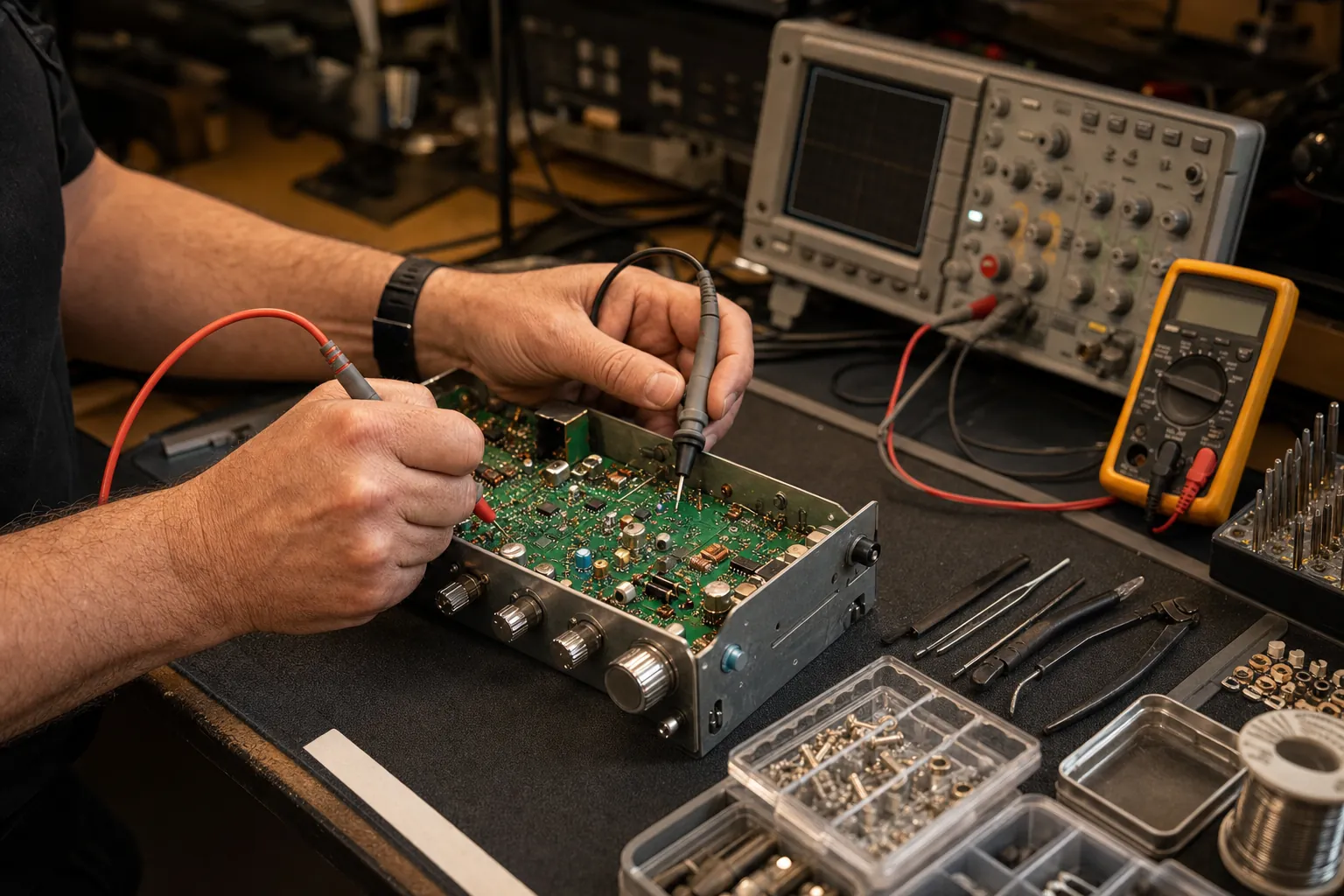
When the symptom remains after those external checks, a bench check is more useful than replacing parts at random. Bring the radio model, microphone, antenna details and a clear description of what changed. Custom CB Radios can help sort out whether the issue is the radio itself, an accessory or the installation through a CB radio repair request.
A simple decision before you buy or reinstall
Ask four practical questions. First, do you run routes where a local heads-up could help, such as busy interstates, construction areas, rural stretches or regular loading locations? Second, do you have a safe, sensible place for the radio and microphone in the cab? Third, can the antenna be mounted with proper clearance and a clean coax route? Finally, are you prepared to use it as a brief communication tool instead of a distraction?
If the answer is yes, a CB can still earn its place. Start with an installation that is easy to check and maintain. Secure the radio so it cannot become a hazard. Route power and coax away from heat, sharp edges and moving parts. Make sure the antenna mount is mechanically solid, then measure the system rather than assuming it is ready because it looks right. The antenna mounting guide is useful when you are deciding between a bed rail, mirror bracket, roof location or another mounting point.
If your route is consistently quiet or you only need dispatch communication, spend your time and money on the tools that solve that job. There is no need to force a CB into every cab. But when nearby, shared communication is genuinely useful, a simple radio with a carefully checked antenna system remains a practical piece of truck equipment.
Build It Around the Route
A better antenna system beats a bigger promise.
Choose a radio that fits the cab, then give the mount, coax and antenna the attention that makes nearby communication dependable.
Shop Trucker CB Radios →Frequently asked questions
Do truckers still use CB radios?+
Yes, some truckers still use CB radios, especially when they want immediate updates from drivers nearby. Activity varies by route, region, time of day and the type of work. A CB is most useful as a local road tool, not as a replacement for dispatch, navigation or a phone.
What CB channel do truckers use?+
Channel 19 is commonly associated with highway trucker traffic in the United States, but it is a shared channel, not a private service. Listen before transmitting, keep the message brief and use plain language. Channel 9 is reserved for emergency communications or traveler assistance under the FCC rules.
Do I need a license to use a CB radio?+
An eligible person may operate a properly certified CB station in the United States without an individual license, subject to the operating rules. The equipment, power level and use still matter, so check the current FCC rules and your company policies before transmitting.
Will a more expensive CB radio talk farther?+
Not by itself. Legal CB power is limited, and the antenna system has a major effect on how well a radio performs. A dependable mount, healthy coax, sensible antenna placement and a careful SWR check usually matter more than chasing a feature list.
Is a CB radio better than a phone for truckers?+
They do different jobs. A phone is better for dispatch, maps, records and one-to-one conversations. A CB can be useful when you need to hear or share a short update with nearby drivers at the same time, such as traffic suddenly stopping ahead or a problem at a loading area.
Keep Reading
Related Posts

Guide
How to Install a CB Radio: A Practical Vehicle Guide
Plan a safe, dependable CB radio installation by choosing the radio location, power route, antenna mount, coax path and final SWR check in the right order.Read the guide →
Guide
CB Radio Turns On but Has No Sound? 7 Checks Before Repair
CB radio turns on but no sound? Check the volume, squelch, external speaker, microphone and audio modes before booking a repair.Read the guide →
Guide
CB Radio Receives but Won’t Transmit? 6 Checks Before Repair
CB radio can hear but cannot transmit? Check the microphone, push-to-talk switch, mic gain, power, antenna, coax and SWR before booking a repair.Read the guide →
Guide